With graduation just around the corner, I am going to miss all my friends that I made in this class. Most of my friends are going to different colleges far away. I hope that we can all stay in touch when we get into college!
Thursday, May 2, 2013
THE LAST BLOG!
With graduation just around the corner, I am going to miss all my friends that I made in this class. Most of my friends are going to different colleges far away. I hope that we can all stay in touch when we get into college!

Thursday, April 25, 2013
Thoughts on Victorian Poetry
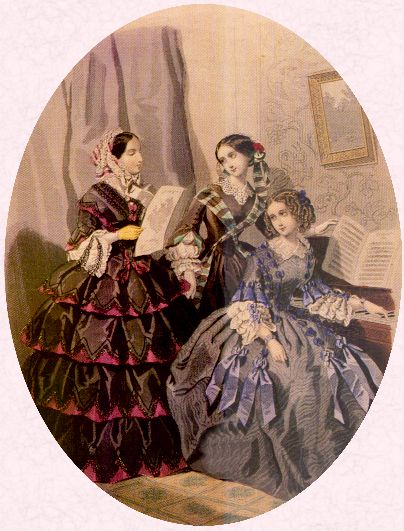
My group and I have found some inconsistent things about Victorian poetry. Some sources say it is very whimsical and is funnier than romantic poetry. Other sources say it is made of nonsense and has a somber or even gruesome tone. I attribute these two largely different views of Victorian poetry to the diversity of the poets. Poets of this time period ranged from adamant atheists to dedicated Christians. The contrast in religious and philosophical views could account for the mixed reviews of the Victorian poems.
Poetry in this time period also varied because it was a transition period between the Romantics and the Modernists. Towards the beginning of the Victorian era, the line is blurred between Romantics and Victorians. The end of the time period also has a blurred line between the Victorians and Modernists.
One main Victorian poet is Lord Alfred Tennyson; he is in the picture on the right. We have studied some of his poems in class such as Crossing the Bar. Before starting this project, I had a difficult time understanding Tennyson's poems. After completing the project I feel I can somewhat understand what his poems.
Thursday, April 18, 2013
San Fran Here I Come!! :)

Tomorrow morning, bright and early, at 5:00 I say goodbye to Lexington, KY and travel to San Francisco! I absolutely cannot wait to get there. Once I heard that the senior trip was to San Francisco, I knew that I had to go. The farthest west I have ever been is Las Vegas. My dad took me when he had a business trip, but I was only five so I don't remember much about it.
We have so many exciting things planned! The thing I am most excited for is touring Alcatraz at night. Some other activities that will be awesome are visiting the Redwood forest, going to a San Francisco Giants baseball game, and seeing the Golden Gate Bridge (of course). We also get to go to many museums and walk around the wharf. I am also interested in eating in some of the specialty restaurants located in San Fran. I am actually a very picky eater, but since I probably won't go back to California anytime soon I think I will, at the least, try everything.
My mom toured around Europe for a month during college and had an amazing time. She said told me that she felt more worldy and mature after her trip. Obviously this trip isn't anything like that, but I think I will learn lots of new and interesting things while in San Fran. This will be the third time I have ridden in a plane, and the first time where I will be able to remember what happened (the other two times I was 4 and 5, so I don't remember much).
Hopefully this trip will be fun, and educational!
Thursday, April 11, 2013
Beowulf: The Hero of The Geats
Beowulf has many heroic qualities explicitly and implicitly stated in the poem. His brute strength and stamina is blatantly mentioned multiple times. One specific example is when Beowulf partook in a swimming competition against Breca. Beowulf stayed in the ocean for five days fighting off sea monsters, while Breca swam away. His ability to rule the kingdom after the king dies prematurely is more implied. The poem focuses more on the battles Beowulf went into, rather than the fact that he ruled the Geats for fifty years.

Another thing that I noticed was how the men lived by a code of honor. They would much rather die in a fierce battle than of old age. Beowulf and his companions often bragged about the heroic feats they had accomplished. The soldiers and captains who had fought in fierce battles were just as respected and loved as the royalty. The Anglo Saxon culture is quite different from our culture today!
Thursday, March 28, 2013
"When A Book Changes Your Life": Life As We Knew It

There are many reasons why I could not stop reading this book. First, I think that the way it's written grabbed my attention. The diary entry format made want to keep reading chapter after chapter. The events being in chronological order was also very appealing to me because I am a straight forward person. I like the simplicity of stories that are in chronological order. Another thing I liked about this book was its informal language. The conversations between the characters were similar to conversations I would have had with my friends and family. The way the characters reacted to their world's being turned upside down was another thing that made me want to read the book again and again. Every character had a different way of coping with the changes they experienced which showed the diversity of the characters.
Overall, this book changed my view on the relationships I have with my friends and family.
Thursday, March 21, 2013
My Favorite Poem: "The Road Not Taken" by Robert Frost

"Two roads diverged in a wood, and I, I took the one less traveled by, and that has made all the difference".
This poem really speaks to me, more than any other poem I have ever read. One reason is the main conflict of the poem: which road should the speaker take? When first reading through this poem, it seems like a silly concept to be writing a poem about. Why would Robert Frost write about choosing a road to travel? After reading the poem a couple more times, I realized that this poem can be applied to life in general. There will always be hard choices to make, and weighing the pros and cons of each decision will allow for the best outcome.
Another reason I love this poem is that the narrator chose the road less traveled. The poem sends the message that taking the more challenging route has a profound and life-changing effect on a person. Whether that is a positive or negative effect is not stated, but by the tone of the poem I believe that the journey on the road not traveled had a positive effect.
I hope we read some poems by Robert Frost in this poetry unit!
Thursday, March 14, 2013
The Definition of Poetry
In elementary and middle school I was always taught the definition of poetry is anything that is in a poem. The Trinity High website (#32) created a similar definition to the one I learned; "Poetry is basically anything that calls itself a poem". Well then, what is the definition of a poem?
Dylan Thomas believes "A good poem is a contribution to reality. The world is never the same once a good poem has been added to it. A good poem helps to change the shape of the universe, helps to extend everyone's knowledge of himself and the world around him". In this definition, Thomas gives an abstract overview of what a poem is and mainly how it affects the reader. I don't mind this definition, but I am a concrete thinker and would like a more straight forward answer.
Another definition is given by Robert Penn Warren who says that "the poem is a little myth of man's capacity of making life meaningful. And in the end, the poem is not a thing we see -- it is, rather, a light by which we may see -- and what we see is life". This is, again, a very airy and abstract concept. I feel that Warren's definition cannot be applied to all poetry though. Sometimes, I strongly dislike specific poems and they are not "a light by which [I] may see".

The Chambers Student Dictionary defines a poem as "a composition in metre; a composition of high beauty of thought or language and artistic form, in verse or prose; a creation, achievement, etc., marked by beauty or artistry". This is a more textbook definition than the two I mentioned above, which my concrete mind likes, but I still think that something is missing from this definition. The use of the words beauty, language, and artistry make is too general of a definition.
Even though there are multiple adequate definitions of poetry, there may never be a perfect definition that encompasses the full spectrum of poetry without being too broad or too narrow.
Subscribe to:
Comments (Atom)